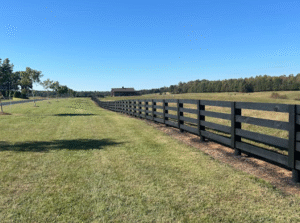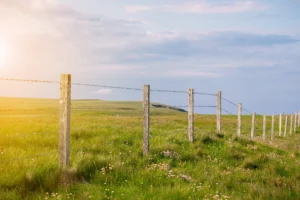
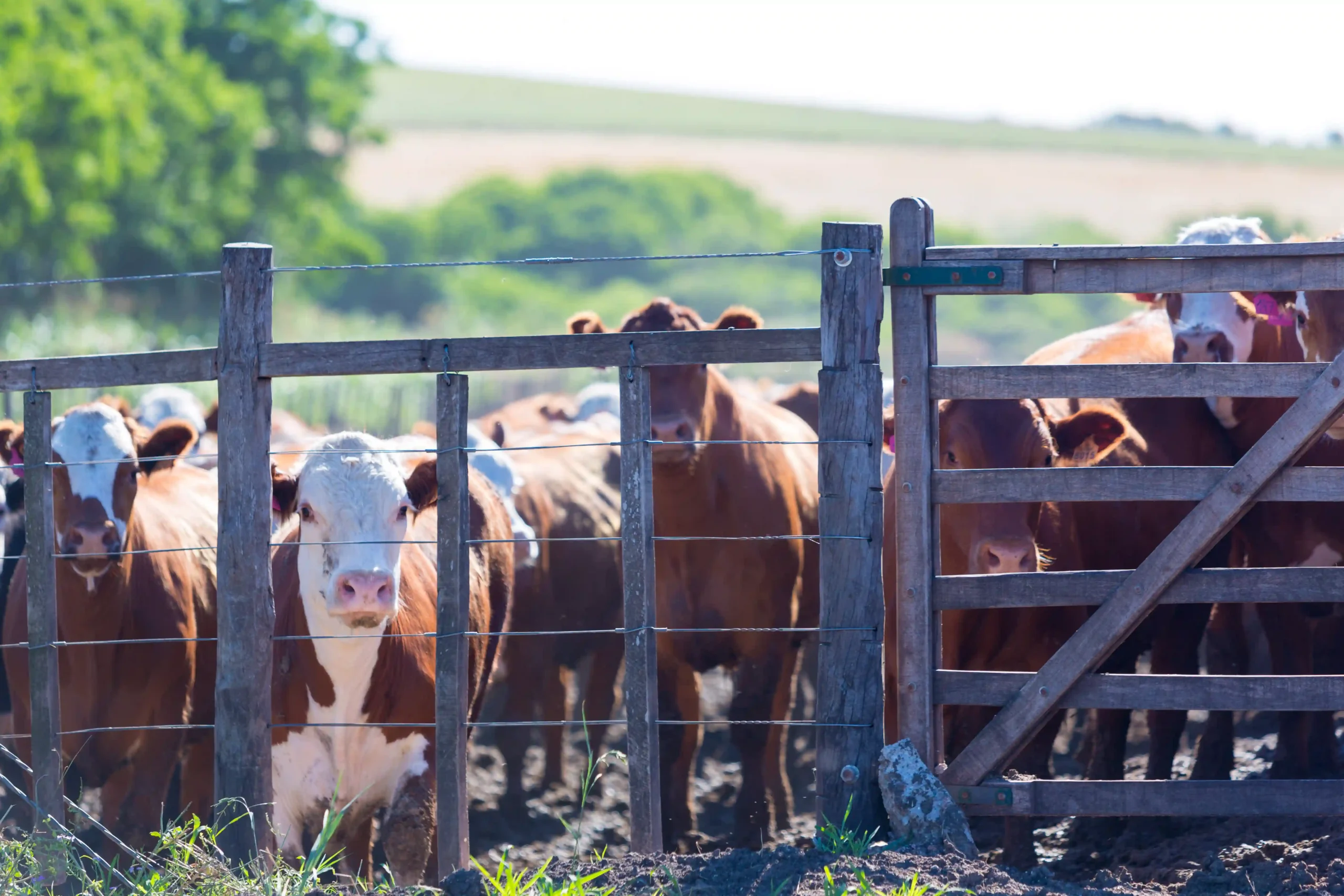
Whether you have rural land with a few horses or run a farm full of chickens, you need a way to contain your livestock and establish borders around your property. Wire fencing may be the solution you need. However, before hiring a fencing company to begin installation, it’s best to understand what your options are for wire-based livestock fencing.
L&M Fencing is one of the go-to fencing companies serving Hall County, Georgia. Our comprehensive guide below explains key factors to help you make informed decisions regarding your property’s pasture fencing needs.
Permanent vs. Temporary Wire Fencing for Livestock
Wire pasture fencing can be either temporary or permanent, depending on your needs. So, which would be best?
Consider installing a permanent fence around your farm when you want to establish clear boundaries for both livestock and people. The fencing can separate your property from your neighbor’s while also protecting your animals from nearby roadways and predators. Since the fencing would be a permanent fixture on your property, it will likely be durable and low-maintenance, allowing for long-term use.
If you don’t need a permanent fixture on your farm, consider using a temporary wire fence. This option is movable, so you can set it up where necessary and store it until you need it again.
Because moveable fences aren’t temporary, they tend to be less durable than permanent ones. However, they’re useful until you can afford a permanent pasture fence or decide your farm’s ideal field layout for grazing and containing livestock.
Standard Wire Fencing Options for Livestock
You have several wire pasture fencing options to choose from, including:
- Woven wire fences: This option is ideal for perimeter fencing and consists of vertical and horizontal wires that form a grid pattern with a knot at each intersection. The openings between the wires can vary in size.
- Electric wire fences: These fences have multiple high-tensile wires running from post to post, with electricity flowing through them. It accommodates all livestock, but it requires insulation, chargers, and grounding rods for safe and efficient performance.
- Poultry netting: Unlike many other wire fence options, poultry netting offers little durability. However, the hexagonal openings and thin wires make poultry netting suitable for chicken runs.
- Barbed wire fences: Barbed fences also use high-tensile wire with twisted knots and protruding barbs that run every three to five inches.
Fence Posts To Consider for Your Farm
No wire fence is complete without sturdy posts to keep it up. Metal T-posts are ideal for any type of wire fencing due to their heavy weight. Their T-shape also enhances the posts’ strength, along with the anchors that keep them securely in the ground.
Treated wood posts using pressure-treated pine or another wood species are also an option. The posts vary in length, usually between six and eight feet, and they’re suitable for barbed and woven wire fences. They can last up to 30 years, making them worth the investment.
For temporary wire fences, step-in posts are usually the best option. They often consist of lightweight fiberglass or plastic for easy mobility. They’re also affordable.
Suitable Fencing Options Based on Livestock
Let’s take a closer look at the best wire fences for different livestock types:
- Cattle: Cattle are strong animals, so install a high-tensile wire, barbed wire, or electric fence to handle their size, weight, and pressure.
- Poultry: Mesh or electric netting is excellent for chickens and other poultry because it keeps the birds from wandering while safeguarding them from predators.
- Horses: Opt for electric or high-tensile wire fencing for horses, as they are prone to injury. Horses are more likely to stay safe on your farm when they can see the fence clearly and avoid scratching themselves on its smooth surface.
- Swine: Your hogs may benefit from woven wire fencing since they lack gaps large enough for the animals to slip through.
- Mixed livestock: Electric and woven wire fences are versatile enough to safely and efficiently contain farm animals.
How To Determine Your Ideal Livestock Fencing: Key Considerations
Before choosing a wire fence, consider its purpose. Do you want to protect your livestock, establish property lines, or have a movable border? You should also take into consideration the type of livestock you own, your property’s size and its layout, and your budget.
L&M Fencing: Your Hall County Fencing Experts
Wire fencing for livestock in Hall County, Georgia, comes in several varieties, making it suitable as permanent perimeter fencing or temporary fencing for rotational grazing and more. If you’re ready to establish clear borders around your farm and livestock, turn to L&M Fencing. As an experienced fencing contractor, we specialize in installing high-quality pasture fences to help Hall County residents protect their property.
Our fencing options consist of durable, high-quality materials, making them ideal for local ranches, farms, and rural properties. Call L&M Fencing today at (706) 701-8079 or complete our convenient online form to request a free quote.